Shape Poems


Poetry is in the air in my 4th grade classroom! We are reading and writing poems every day for the next few weeks. I always like to start my poetry unit with something that has a low intimidation factor (and does not require rhyming in any way), so we usually begin the poetry unit with shape poems (or concrete poems). In past years, the students used a writing “frame” I provided to write what I called adjective poems. They added adjectives to the poem frame and then transferred the poem to the shape. I explain the process for the adjective poems in THIS BLOG POST.

concrete poems shape poems student poetry

This year, students chose a simple object and brainstormed words they associated with their object. Students picked all kinds of items– basketballs, dogs, donuts, soda bottles, ice cream sundaes… They made a word bank using a graphic organizer like THIS ONE. Once they had a big list of words, we began a search for an image to match their word.

basketball-concrete-poem

We searched for black and white clipart in Google images. The kids pasted the clipart image into a Word document and enlarged the blackline image to fill an 8 1/2″ x 11″ page. We printed the image and lightly traced the main lines with pencil on a blank piece of copy paper. Using black pens, the students used words from their word list to fill in the shape over the traced pencil lines. Students left the paper with the clipart image under the paper with the concrete poem while writing to serve as a guideline. In the example below, the student is starting to create the French fry shape by writing words like “salty”, “crispy”, or “crunch” multiple times in each fry. The student poets would match the area they were filling with a word that made sense for that area of the image.concrete-poem-patternThe kids also added a few details to complete the effect such as pink pen instead of black for the dog’s nose.dog-concrete-poem-pink-noseCheck out more ideas for student poetry in my TeachersPayTeachers store. CLICK HERE to purchase classroom resources for teaching poetry.key-concrete-poem


Reindeer Food Craft

reindeer-food-bags

Holiday market week is here! After working all semester, my students’ products are bagged, tagged, and ready for purchase. The first product we assembled back in September were these reindeer food ornaments to hang on your Christmas tree (we also made these BIRDSEED ORNAMENTS and several MASON JAR MIXES). On Christmas Eve, you open the bag and sprinkle the reindeer food on your lawn to attract Santa’s reindeer.

I originally received a bag of reindeer food from a grandparent in my son’s 3-year old nursery school class. I kept that original bag all these years and duplicated (modified) the pattern over the years. The original reindeer food is a little fancier than the version my fourth graders made this year. Mass production with a 10-year old work crew forced us to simplify a few of the steps.

reindeer-food-materials

Materials

  • old fashioned oatmeal (not instant)
  • glitter (we prefer silver, light blue, or clear colored)
  • bead bags with ziploc top (3″ x 5″)
  • tan or light brown cardstock or scrapbook paper (3″ x 4″ pieces, folded in half)
  • dark brown cardstock or scrapbook paper
  • googly eyes (10 mm)
  • red pom poms (10 mm)
  • jingle bells (3/4″)
  • skinny ribbon (~12″ strips– curly ribbon works)
  • stapler
  • Elmer’s glue or hot glue gun
  • scissors

Directions

  • Mix oatmeal and glitter in a bowl. You will need 1/4 cup to 1/2 cup of oatmeal mix per bag, so mix the amount you need and add the amount of glitter sparkle you like!
  • Scoop sparkly oatmeal into a bead bag and seal the bag closed making sure the ziploc is secure. Don’t overfill the bags. I like the bags to be about half full and not overly plump. Set aside.
  • Make an antler template. I cut up a manila file folder to make my template. The antler is about 2 1/2″ tall and 1 1/2″ at the widest bumpy part.  Using the template, trace the antler pattern on the dark brown paper and cut as many antler pairs as you need.

reindeer-food-antlers

  • Fold the light brown 3″ x 4″ paper in half, so the paper is 2″ x 3″. Glue two antlers on the back and let dry. Watch that the antlers do not slide while the glue is wet. You may need to hold the antlers in place for a minute until they stick in position.

reindeer-food-paper-pieces

  • Thread one jingle bell onto a piece of ribbon. Silver jingle bells were easier to thread than gold; they had a bigger “loop” on the bottom in the brand that I purchased from Michael’s Crafts. Move the jingle bell to the middle of the ribbon piece. Match the ends of the ribbon and tie a knot close to the ends. After the antlers dry, wrap the loop of ribbon around the folded piece of paper, so the knot of the ribbon sits up against the fold, and the jingle bell is above the paper near the antlers (like a handle for hanging).

reindeer-food-ribbon

  • Slide the oatmeal bag into the folded paper and line up the top of the bag with the crease at the top of the paper fold. You may have to adjust the ribbon strip a little, so everything sits neatly. Staple the bag in place in the center of the paper where the mouth would be.
  • Glue eyes and nose onto the front of the paper and let dry.
  • If you want to dress up your reindeer food a little, see the picture below with embellishments like the bow on the front (to hide the staple) and pointed face. This one is my original reindeer food bag that I have been using as my model all of these years– and not letting my children open and use it!

reindeer-food-original

Facebook Character Activity

facebook-group-samples

A few years ago, my students designed a Facebook page for a favorite character in the book, Dying to Meet You by Kate Klise. I was surprised how much critical thinking was involved. The students needed to pick a significant scene from the story, summarize it from the point of view of a character in the form of a Facebook post, and then respond to the post from the point of view of a different character.

facebook-sample-jack

It was challenging for students to think about one story event from several angles. The finished writing activity reveals quite a bit about a student’s understanding of events in the story, character traits, and character interactions and motivations. It is a short activity but packed with reading skills, and the results are completely entertaining! It also had the bonus of incorporating technology skills since my students completed the Facebook page digitally.

facebook-page-samples

I recently assigned the activity again, and it did not disappoint. My students were in three separate reading groups this time around, but all students completed the Facebook page based on a character from their assigned book. It is such an easy activity to adapt to any novel study.

facebook-pp-template

In my classroom, I inserted the blank FACEBOOK TEMPLATE that I designed as a background in a PowerPoint slide and then added text boxes as placeholders on top of the background. I shared the template with my students, and they clicked in the text boxes to add their writing. They also inserted pictures, used bullet points, and changed font sizes (potentially tricky technology skills for 4th graders).

facebook-sample-post-seymour

For younger students or classrooms/homes without computer or printer access, the activity could be handwritten using THE TEMPLATE. The basic Facebook page with the text box outlines can be printed, and students draw profile pictures and neatly write posts, likes, and replies.

facebook-sample-post-jack

The samples above are related to the novels, Dying to Meet You, Love That Dog, and Hate That Cat. Complete novel units are available for purchase in my teacher store. Click the book names to see more details about the novel studies.

DIY Ziploc Flashcard Pouch

Almost every teacher I know has the uncanny ability to take common household supplies and turn them into some sort of classroom supply. One of my favorite DIY student materials is a Ziploc flashcard pouch. Over the past few years, I manufactured DIY Ziploc flashcard pouches for back to school. Using quart-sized Ziploc bags and some duct tape, I make a pouch that clips into student binders to hold loose materials.

At the beginning of the year, I give each student a pouch to hold vocabulary and grammar flashcard rings in their binders. The pouches also work well for math facts flashcards, sight word flashcards, username/PW information for school apps, and a variety of other everyday classroom items. Written directions are below or watch THIS 5-MINUTE VIDEO that walks you through the steps.

flashcard-pouch-materials

Flashcard Pouch Materials

  • quart-sized Ziploc bags (go for heavy duty, so they don’t rip before the end of the school year)
  • duct tape in a fun color/pattern (I like Duck Tape brand that has the crazy patterns)
  • single hole punch
  • sharp scissors
  • one piece of notebook paper to measure the distance to punch holes

DIY Ziploc bag flashcard pouch

Flashcard Pouch Directions

  • Put one Ziploc bag on a flat surface, opening at the top and the front of the bag facing up.
  • Eyeball the length of a piece of duct tape that reaches from the bottom of the Ziploc bag to the “collar” or area where the bag snaps together.

flashcard-pouch-duck-tape-strip

  • Cut the length of duct tape you need and place the duct tape on the flat surface, sticky side up.
  • Place Ziploc bag on top of the sticky side of the duct tape only covering half of the width of the tape strip.

flashcard-pouch-duckt-tape-strip-folded

  • Fold the remaining exposed part of the duct tape strip over the top of the plastic bag, so the left edge is covered with a strip of duct tape.
  • Hold the notebook paper with the bottom two holes over the duct taped edge of the bag. Line up the bottom of the piece of notebook paper with the bottom edge of the Ziploc bag.

flashcard-pouch-hole-punch

  • Hole punch two holes into the Ziploc bag.
  • Clip into binder.


Discipline Dollars, a Classroom Management System

Classroom management (the fancy teacher phrase for behavior or discipline system) is my least favorite part of teaching. My main plan of attack is to keep students so busy they really don’t have time to get off task and stir up trouble. Unfortunately, that does not always work, so I have to have some sort of behavior monitoring system in place. This year, my teacher teammate and I implemented a classroom economy to keep students motivated to make positive decisions and (hopefully) reduce disruptive behavior.

discipline dollars classroom management behavior system #classroommanagement #classroomeconomy

Many classrooms have a similar plan. It’s like pulling a ticket or a bear or a penguin or a turtle… The beauty of this system is that it incorporates math skills and financial literacy. Students are paid a set amount on Monday mornings. The goal is to keep the money throughout the week. Students “pay” the teacher for repeated class disruption, organizational issues, or any behaviors that stop the classroom from running efficiently. On the flip side, students can EARN extra money for positive choices that help keep the classroom community running smoothly.

discipline dollars and library pocket

At the end of the week, the students total their earnings and keep a balance sheet of withdrawals and deposits. After a designated amount of time, the students buy a class reward if they have saved enough money. For kids with a surplus of money, they can purchase bonus rewards.

discipline dollars classroom management behavior system #classroommanagement #classroomeconomy

Adapt for Home: Not only does this system work in a classroom, it is a system that works at home for weekly allowances. Children have their weekly amount of allowance money and can keep it if they complete all chores. If they forget to feed the dog for several days in a row, they could have their pay reduced. If they do extra chores like wash the car without being prompted, they could be rewarded with extra money. At school, I use fake Monopoly-like money, at my home, I would pay my children real money.

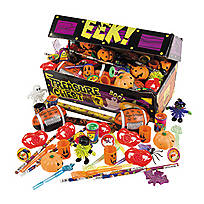
My students are most excited about the individual rewards. We have tangible items for a lower price that I am getting at Oriental Trading. Our first group reward will be the first of October, so I am stocking the prize box with Halloween themed items LIKE THESE and THESE. But, we are also offering more costly items that are specific to our school. Students can save over several months to cash in for experiences that are considered a “coup” at our school.

halloween treasure chest

School Bonus Reward Ideas

  • $10 – $25: Prize Box (erasers, pencils, stickers, bookmarks, key chains, fidgets, fun school supplies)
  • $25 – $50: Shoes off in the classroom, sit at the teacher desk, pick your seat at lunch, homework pass, be first in the lunch line
  • $50 – $100: Hold the flag at school assembly, pick the game at PE class, wear jeans to school (if you have school uniforms)
  • $100+: Design the school lunch menu for a day, make the school announcements over the speaker, pull the fire alarm during a fire drill, give a homework-free night to the whole class

At Home Allowance Reward Ideas

  • Go to the movies or pick the movie for family movie night
  • Go to an indoor bounce/trampoline park for an afternoon
  • Pick the restaurant for a family dinner out
  • Extra TV, iPad, game time

CLICK HERE to visit my TeachersPayTeachers store to purchase the Discipline Dollars Product with editable money templates.

discipline dollars pin