Deal Me In

a hand of cards

I know it may seem like I am not getting much accomplished now that I am on summer vacation, but I must be doing something because I am exhausted at the end of the day. Aside from the Cocktail Testing, my kids and I figured out that Cups Trick Thing, we go to swim practice in the mornings, and I unloaded the dishwasher and folded a load of laundry.

I have also been playing a lot of cards with my kids. My parents visited and kicked off this latest activity. We mainly play Crazy 8s, Solitaire, and War. I was “over listening” to Mr. Star Wars talk to himself during a recent game of solitaire, and it dawned on me how many skills are wrapped up in a card game.

** If you are unfamiliar with the rules of play, click here for Crazy 8sSolitaire, and War.

solitaire with kids

Grouping, Sorting, and Matching

  • In order to play card games, the player has to be able to identify and/or separate the suits and the numbers. In Crazy 8s, the player can switch between the suit and the number at each turn. Deciding if you want to use a matching suit or a matching number requires a little bit of strategy (see predicting and strategy below). Kids have to be able to group and sort like items. When a kid plays cards, he is practicing basic math skills and symbol recognition that is helpful for early readers.
  • The cards that the player holds in his hand can be grouped by like numbers and like suits (and then sub-grouped by numerical order). This reinforces organization and sorting.  

Counting, Ascending and Descending Order

  • The goal of many card games is to gather cards in numerical order. In Solitaire, the whole point is to create a stack of cards that count down and also move them to the ace piles and count up. In the descending order piles, you have the added skill of a red/black alternating pattern. The player also needs to know which number is next and anticipate that card appearing. If your child’s teacher mentioned extra practice with ordering numbers, play a few games of solitaire with him/her.
  • Players have to remember that a jack is lower than a queen, which is lower than the king. Depending on the game, the ace can change from less than the 2 to greater than the king. Kids translate the value of the face cards into a number value for ordering. Mentally renaming the card’s worth requires a multi-step thought process (i.e. critical thinking).
  • In the game of War, you have to know the difference between greater than, less than, and equal in order to play. How many homework assignments have you seen that practice this skill?

Predicting and Strategy

  • To win a game, there is a little strategy and a little luck involved. In Crazy 8s, you often hold cards in your hand that give you the option of putting down a matching number card OR a matching suit card– or you might even be able to play a crazy 8. Which do you choose? Well, if you are Miss Priss, you announce that you could do either (giving away what is in her hand), and you think through which one is the better choice based on what MIGHT be in the opponent’s hand. This is great processing on her part. She is not throwing down any old thing but is thinking about the alternative scenarios, the pros and cons of choices she makes, and the various outcomes of each choice.
  • The same thinking process occurs in Solitaire. Mr. Star Wars always points out when he has two choices for his next move like if he needs a black 5, and he has one on the top of a stack of unturned cards and one in the group of 3 cards he has in his hand. Which option is better? Being able to anticipate results and seeing ahead down a few paths is a great skill to practice. Children need to see the direct results of choices they make. On a small scale, a game of cards illustrates cause and effect well.

Taking Turns

  • Sometimes you have to wait for your turn especially if the other player is contemplating his move. It might require some patience. Taking turns involves a specific order of back and forth (just like a conversation). One person makes a move, the other person responds, the first person reacts to the second person’s action. It is important to learn how to take a turn, wait, assess, and respond. 

The Suits

  • The red cards are pretty easy to identify. Most kids know the diamond and heart shapes. In order to distinguish the black suits, we say that the spades (another word for a little shovel) look like a shovel. The club looks like a clover and both of those words start with the letter “c”. 

I caught TheRoomDad teaching the kids 5 Card Poker. Miss Priss told me that she doesn’t really know the rules, but she knows if she can get a group of cards in number order, that is good. If she can get a group of cards with the same number, that is good. If she doesn’t know what to do, she just keeps all of her highest cards. I have to say, I am fairly impressed with her strategy and have no doubt she would beat me in a game of poker.

So That’s How You Spell It

grocery list

This is the grocery list Miss Priss gave me. Can anyone guess what we need from the store?

I always have a student who is a poor speller. There are kids who just never get the hang of the common patterns in the English language. I think our use of text speak and lack of handwriting practice is partly to blame, but I will save that discussion for another post.

I have a few tricks to help my students with common spelling errors, and I give some practice work for the summer too. In the age of spell check, correct spelling will be about recognizing the best way to spell a word rather than having to generate the correct spelling from memory.

If your child needs some practice over the summer or some reminders when school begins again in August, try a few of these spelling tactics. Your son or daughter might not be heading to the National Spelling Bee, but they might catch a few more errors in their writing.

Use What is Already There

  • I often have students misspell words that appear in the test or assignment. Practice looking back through a paper and comparing your spelling to words that are provided in questions or directions or even a word bank.
  • This strategy can also be useful if a child sees a word that rhymes. Rhyming words may have the same spelling pattern and the base part of the word can be copied. If you can spell rock, you might be more likely to spell sock with the CK ending. 
  • The same tactic would work if a child needs to change an ending on a word. If you see the word humid and need to write humidity, a child could make a reasonable guess using the original word given.

copying paragraphs

Practice Copying Words Correctly

  • The more often you spell a word correctly, the more likely you will spell it correctly in the future. There is muscle memory, and your hand memorizes the way letters connect (which is why cursive handwriting is important IMO). Think about writing your name. When I got married, it took awhile to retrain my hand not to automatically begin the letters of my maiden name.
  • If your child’s handwriting is really poor, and you have moved on to keyboarding, you can complete this same activity on the computer, although I think the act of handwriting is more effective.

Practice Adding Endings to Words

  • This is a great reminder about the spelling rules that we are taught directly or pick up through reading. Start with a base word like hop. Add a variety of endings and say aloud why/how the word changes. Hop becomes hopped, hopping, hops. For the ED and ING endings, we doubled the final consonant to protect that vowel sound. For the S ending, we did not need to protect the vowel sound because we were adding the consonant S. In this case, look at the word hoping. How is it pronounced? Why? What is the difference between hopping and hoping.

Practice Locating Mistakes

  • Look at a sentence or small paragraph with errors. Find the errors and make the necessary corrections.

Here are some other 4th grade tips for words that are often confused.

Separate

  • There is A RAT in the middle of the word sepA RATe.

Affect v. Effect

  • Affect is a verb (action– also starts with A). It will often have a helping verb nearby. If you can’t remember your helping verbs, I have a list here in the grammar plan. The storm did AFFECT our electricity.
  • If the word has ED on the end,  it should probably be AFFECT. We were AFFECTED by the power outage. This example also has the helping verb clue.
  • Effect is a noun. It will often have A, AN, or THE nearby and be the subject of the sentence. The EFFECT of the storm was devastating.

Desert v Dessert

  • Desert is a dry place because of little rainfall.
  • Dessert is the yummy treat you have after a meal. It has two S’s because you want two servings!

Their, They’re, or There

  • Their is possessive; it shows ownership. If you can replace their with the word his or her, and the sentence makes sense, use THEIR. We went swimming at their pool. We went swimming at his pool.
  • They’re means they are. Read the sentence with the words they are. If it sounds right, use the contraction. They’re swimming at the neighbor’s pool. They are swimming at the neighbor’s pool. In fact, any time you are dealing with a contraction, use the complete words to check yourself. The replacement word test for their and they’re will work when checking it’s and its. Try using it is and his or her.
  • There is a location. If the replacement words used above sound funny, use THERE. You can also sometimes replace there with at that placeWe will be swimming there. We will be swimming at that place.

Too

  • Too has an extra O because you have more, extra.
  • If you can replace too in a sentence with also or so, you probably need TOO. That soup is too hot, and it burned my tongue. That soup is so hot, and it burned my tongue. I want to eat soup too. I want to eat soup also

I have teaching materials for commonly misspelled words, spelling rules, and spelling patterns. To purchase spelling resources from my TeacherPayTeacher store, CLICK HERE.

Everything I Know about Discipline I Learned from the Dog Trainer

Birdie

This spring our vet suggested we escalate our dog training. Our dog is 90% good and 10% unpredictable. The vet didn’t think we had to classify Birdie as a “bad dog” but when she became possessive and growly, we had to fix the issue.

After the trainer’s first visit, it occurred to me that everything he advised applied to discipline in the classroom with my students and at home with my kids.

Replace your child’s name any time the word “dog” appears. Let me know if you see any improvement after following Bark Busters’ advice. According to Bark Busters, you need to practice the desired behavior daily for at least 5 weeks before the appropriate behavior will be automatic and without any hesitation.

The dog needs to recognize the adult as the leader.

  • I have to set clear boundaries, so the dog will accept me as the leader of the pack.
  • The dog will constantly test the boundaries, and I need to be consistent. The dog feels safer when she knows that I will stop her when she hits the limit of what she is allowed to do.
  • If I am trying to get the dog to come to me, and I keep calling her name, but she does not respond, I may NOT give up until the desired behavior is demonstrated. The dog will see that as a weakness and know that she does not have to do what I ask. I can change my tactics by moving closer to the dog, spraying her face with a water bottle, or attaching the leash, but the dog needs to see that ultimately, I am in charge. 

If the dog is adrenalized (hyper) remove the dog from the situation calmly, then give commands.

  • When there is a lot of excitement, and the dog is not responding to my voice, I calmly clip the leash on her and pull her away from the chaotic situation. As soon as I have her in a place where she can focus on my commands, I give her directions. Avoid getting emotional and screaming at the dog.

Routine and retraining is important for the dog.

  • In order for the dog to acquire new skills (like putting on shoes getting in the car crate when I ask), I have to repeat the procedure. If I don’t repeat the procedure multiple times, the new skill will not be successful. I also have to ask the dog to perform the skill the same way each time. If I switch up my directions, it will confuse the dog.
  • If I leave town or the routine is disrupted (like when summer break started), the leader may have to practice basic training again, so the dog remembers what the rules and expectations are.
  • Keep directions and training simple and short. If I give long, complicated requests nothing will happen. 


The dog needs vigorous play several days a week, or she will get bored and misbehave.

  • If the dog has nothing to do, she will create an activity for herself that will most likely be something that I do not like. I have to provide opportunities that stimulate the dog to keep her from being destructive in the house. The vigorous play does not have to happen every day. If I provide a few activities each week, the stimulation carries over for a few days.
This is what dog fur looks like after the dog eats an entire red felt tip pen.

This is what dog fur looks like after the dog eats an entire red felt tip pen.


Author! Author!

selznick and klise letters

TheRoomMom blog is part parenting tips and part teacher tips (with some snacky food and book ideas thrown in). Today, the teacher part of my blog is featured on the Teaching Blog Addict.

“Contacting Book Authors” is the featured activity in their weekly teacher freebie list. The best part is, I did not even know I had been selected!

If you need an activity to build a little excitement for any summer reading assignments you may have, try contacting the book author. We had great success last year. Here are a few of the authors who replied:

  • Brian Selznick (Wonderstruck and Invention of Hugo Cabret)
  • Tom Angleberger (Origami Yoda series)
  • Leslie Connor (Crunch)
  • Julie Edwards (Last of the Really Great Whangdoodles— letter was from her “fan mail coordinator”)
  • J.K. Rowling (Harry Potter— form letter)
  • Cressida Cowell (How to Train Your Dragon series)
  • Annie Barrows (The Magic Half)
  • Sheila Turnage (Three Times Lucky)
  • Kate Klise (Dying to Meet You series)
  • Patrick Carmen (Floors— took 9 months to receive a reply!)
  • Erica Orloff (Magickeepers series)
  • Obert Skye (Wonkenstein and Potterwookie)
  • Lisa Schroeder (It’s Raining Cupcakes)
  • Jacqueline Kelly (The Evolution of Calpurnia Tate)

Picture of Free Teacher Downloads at Teaching Blog Addict

The Right Reading Level


One of TheRoomDad’s best friends, affectionately known as Uncle Burrito at our house, visited a few months back and asked me about book recommendations for his 2nd grader. His daughter is a crazy good reader and not only finishes books at mock speed, she also reads at a level that is much higher than an average 8 year old. He said that she finishes books on the ride home from the library or book store, and the book never even makes it into the house. He wanted book ideas that might slow her pace a little but also have content that is suitable for a 2nd grader.

peter-and-the-starcatchers

How do you help your child pick a book when they are reading at a higher level than their age?

  • First of all, it is OK to read below reading level. It increases fluency, supports comprehension, and minimizes frustration. In fact, I often encourage reading at the low end of a child’s reading range when reading for pleasure or during “free reading” time.
  • Think about books you loved as a child and recommend those titles. I find that classic books stand the test of time very well, and I think the content is not nearly as “edgy” as some literature that is published today. 
  • Find a series that your child loves. This is a great way to buy some time before you have to come up with more titles. If you can find a series with a good first book, chances are the content will stay at about the same level in all of the books.
  • Not only can you follow a series, you can also follow an author. But, some authors write for a young and older audience, so pay attention. Think about Judy Blume’s Forever versus Tales of a Fourth Grade Nothing.
  • Read the book jacket or online summary of a book. If the synopsis mentions death, destruction, or “coming of age” (translation = puberty or romance), that is a red flag that the content may be for an older child.
  • Our library has a new eReader service. You can check out books through your iPad, and they download to your device. The book is deleted from your iPad on the due date. This won’t slow down your speedy reader, but it will reduce your visits to the book store and library.

Here are a few book options that are high reading level for the grade but “clean” content.

Advanced 1st/2nd Grade Reader:

  • All of a Kind Family by Sydney Taylor, 4.9
  • The Black Stallion by Walter Farley, 6.5
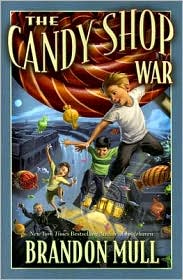
  • The Candy Shop War by Brandon Mull, 4.6
  • Cricket in Times Square by George Selden, 5.9
  • The Doll People by Ann M. Martin, 3.8
  • Henry Huggins series by Beverly Cleary, 4.1-5.7
  • The Indian in the Cupboard series, 5.5-6.1
  • The Last of the Really Great Whangdoodles by Julie Edwards, 7.3
  • The Lemonade War series, 3.4-4.5
  • Little House series by Laura Ingalls Wilder, 4.3-5.3
  • The Million Dollar Putt by Dan Gutman, 4.5
  • No Talking (5.0) and School Story (4.7) by Andrew Clements
  • Poppy and Friends series by Avi, 3.5-5.8
  • Ramona series by Beverly Cleary, 3.5-5.9
  • The Secret Garden (6.8) and The Little Princess (4.0) by Frances Hodges Burnett
  • The Sherlock Files series by Tracy Barrett, 4.3
  • Tuesdays at the Castle by Jessica George, 3.0
  • Who Was series by various authors, 3.0-4.0

Advanced 3rd/4th Grade Reader:

  • Far North by Will Hobbs, 6.8
  • How to Train Your Dragon series by Cressida Cowell, 5.7-7.4
  • The Incredible Journey by Sheila Burnford, 8.1
  • My Side of the Mountain by Jean Craighead George, 6.1
  • The Mysterious Benedict Society series by Trenton Lee Stewart, 6.3
  • Urchin of the Riding Stars by M.I. McAllister, not leveled
  • Peter and the Starcatchers by Dave Barry and Ridley Pearson, 6.2
  • Princess Academy by Shannon Hale (sequel has a little romance), 5.0
  • Remarkable by Lizzie K.. Foley, not leveled
  • The Secret Series by Pseudonymous Bosch, 5.3
  • The White Mountains series, 6.1
  • The Wizard of Oz series by Frank Baum, 6.9

Reading Levels

  • I included a reading level for each book/series on the list. This is a guideline only. 4.3 is roughly where a typical student would be in the 3rd month of 4th grade. For more information on leveling books you can read this article on the Scholastic website. Not only are books leveled by content, they also look at the length of words and sentences. More words with lots of syllables might bump up the reading level. So, The Last of the Really Great Whangdoodles, which has words like Papilionaceous, earns a higher level.