My Favorite Back to School Equipment

Today is the big day– our first day of school. On the homefront, getting ready has been easier than anticipated. Our school provides supplies, so I did not have to shop for notebooks, pencils, glue, tissue, or wipes. My kids wear uniforms, so I ordered online in bulk last month. And, we did not need new bookbags, water bottles, or lunchboxes because I splurged a few years ago for some higher end items that are built to last. If only setting up my classroom had been this easy…

planetbox lunchbox

The PlanetBox Lunch System

  • I eat lunch alongside my students, and a couple of years ago, I noticed a few of my students had a lunch carry case with a metal tray inside that looked like an army (prison?) lunch tray with divided sections. The tray had an attached lid that clipped closed and fit inside a thermal carrier. There were pockets on the outside that had room for a juice pouch or small water bottle. I loved this lunch bag. I had to have it for my own children.
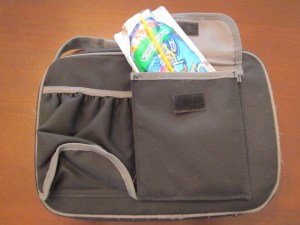
planetbox lunchbox exterior

  • The lid for the metal food tray stays attached, so I do not have to scramble to find lids in the morning, which I think is the benefit to this product over other bento style lunch boxes. We (and by “we” I really mean TheRoomDad) fill each compartment in the tray and clip the lid closed. We have not had to buy lunch baggies or mess with smaller lunch tupperware containers since we started using the PlanetBox.
  • The metal tray is dishwasher safe. The kids empty any leftover lunch bits and drop the tray in the dishwasher when we get home. I just have to remember to run the dishwasher at night. It dries completely unlike the tupperware that is perpetually wet after a dishwasher cycle.

planetbox lunchbox open

  • Place a flat icy pack on the bottom of the carry case under the tray to keep the food cool. You can purchase special icy packs from PlanetBox, but my Blue Ice packs work just as well.
  • There are a variety of sizes available; my children have The Rover. I do need to cut crusts off the bread to fit a whole sandwich in the large compartment. We also avoid anything juicy (like cut strawberries) that will drip and  leak.

LL Bean backpack

L.L. Bean Original Plus Book Pack

  • Three years ago when Mr. Star Wars started 1st grade, we bought the bigger L.L. Bean backpack with the water bottle pocket on the side and added his name for ID purposes.
  • The bag has a variety of pouch sizes for pencils, pens, and books. It also has little secret places, which are great for hiding cash or checks when I have to send field trip money to school.
  • The bag is easy to clean, and I have not had any zipper problems. The nice thing about L.L. Bean is that they will replace the bag if we ever do have problems with it.

camelbak water bottles

Camelbak Insulated Water Bottle

  • It is double insulated like a Tervis tumbler, so it does not sweat while sitting on a desk (very important to teachers).
  • The drinking spout can be pushed down to close the water bottle.
  • The lid has not started leaking yet.
  • I can detach the straw.
  • It is dishwasher safe.

What are essential school supplies in your house and is the brand important?

P.S. Teacher friends, there is a one day sale at TeacherPayTeachers Wednesday, August 20, 2014. Use code BOOST to save up to 28% off your purchases. Start your shopping by visiting This InLinkz Link-up to see some favorite upper elementary teaching resources.

Game On!

classic battleship

Mr. Star Wars is going to a friend’s birthday party this weekend, and we shopped for a present today. I am starting to believe that shopping for a boy around age 9 or 10 is difficult. We have been giving a lot of small Lego sets for birthday presents, which are usually around $10 at Target, but I think it is possible we are aging out of Lego gifts (insert RoomMom’s heart breaking here). Mr. Star Wars chose the classic Battleship game as the birthday gift for this party.

Battleship is a great game and gift. In fact, board games in general might be the answer to my gift dilemma for this age group. As a teacher, I completely approve of this choice. When kids play games, they reinforce great critical thinking and planning skills needed in the classroom. Socially, they learn to take turns, cooperate, and communicate with their opponents. Another great feature is the fact that a variety of ages can play together. Look for sales at Target or WalMart and pick up a few of these games to have on hand as a gift for your next birthday invitation.

hedbanz

  • Battleship: Players must understand coordinates and a grid. They also use the process of elimination to zero in on targets.
  • Hedbanz: Players activate background knowledge and categorize to ask questions that will narrow down options to arrive at an answer. It encourages targeted questioning and the ability to move from general to specific rather than haphazard guessing.
  • Apples to Apples: Participants take an adjective and consider scenarios where the word would be used to create a logical pairing from cards in the players’ hands. It requires vocabulary skills and understanding of context.
  • Trouble: Weigh pros and cons of moving the game piece out of the home base or advancing a piece that is already on the board. There is the opportunity to gauge risk and reward. We also really like the popping noise the plastic bubble makes when you press it to roll dice.
  • Boggle: This game tests a child’s bank of sight words as well as uses knowledge of all of the phonics rules and patterns. If a player is smart, he will locate a base word, then start to add rhyming words or endings (like IN to PIN to SPIN to SPINS) to generate bigger lists.
  • Connect 4: This game works well to help kids begin to anticipate different results of one move (cause and effect). A child can predict what will happen two or three moves out and adjust her choice. There is also a little bit of pattern sorting in this game too.
  • Monopoly: Budgeting, counting money, and making change!
  • Kanoodle: This pocket game contains colorful connected beads that are stacked into shapes. Players use lots of spatial thinking and logic to solve the puzzles.

kanoodle

Do you like to give games for birthday gifts? If so, what are good game choices?

One other tip– if you have games that your children do not play anymore, think about donating them to a classroom. I like to keep games in the back of my room for students who are early finishers or for a rainy day when we have indoor recess.

boggle


Teacher Emergency Kit 2014


teacher emergency kits

Every year I create some sort of back to school gift for my children to give to their new teachers on the first day of school. For the past 3 years it has been a variation on an emergency kit for the teacher.

In case you missed my memo from the past few years, teachers are trapped in the school building until every last student is out the door at the end of the day. There are no quick trips to the grocery store or the gas station for an aspirin or a Coke. If teachers do not bring essentials with them and have a secret stash in the classroom, they are out of luck until the end of the day. Giving an emergency kit to a teacher is a thoughtful gift idea.

teacher emergency kit pouches

The Cloth Wallet

  • This year I found a free pattern for a business card holder with two pockets on Craftsy.com. They weren’t the right size, but I doubled the fabric piece measurements in the pattern to get the size I needed to hold the contents of the teacher emergency kit. I used 11 1/2″ x 8 1/2″ fabric pieces for the outside, lining, and interfacing and 11 1/2″ x 13″ for the pocket. (FYI– You are required to register on the site before downloading the free pattern.)
  • If you are a normal person and don’t have the obsessive need to sew massive amounts of cute little cloth wallets, use a bead box like I did in 2012. If you do like sewing but want a super fast sewing project, make the potholder clutch like the one I made in 2013.

teacher emergency kit contents

The Contents

  • Forehead temperature reader: This is a new addition to the emergency kit. Students love to leave the classroom and take a walk. One way for a student to get out of the classroom is to tell the teacher that he/she does not feel well, so the teacher will send that child to the office for a temperature check. Not anymore. With the forehead temp reader, a teacher can quickly see if a child is in fact a little warm, and the student’s plan to sneak out of the room is foiled. The temp reader is not totally accurate, but it is a good gauge. I found mine at CVS.
  • Advil (I put 5 or 6 in a mini ziploc bead bag I get from Michael’s Crafts)
  • Tums (inserted 5 or 6 in a mini bead bag)
  • Band-aids
  • Blistex (or any kind of chapstick)
  • Dental flossers (in a mini bead bag)
  • Travel size Clorox wipes: Here is another new addition to the kit. I am not a fan of Purell or any of the hand sanitizers. It makes my hands smell and have a funny feel to them. I do like a Clorox wipe. I can quickly clean a surface, desk, spill on a backpack, etc. and then my hands are touching things that are (moderately) clean since I cleaned the item rather than my hands.

teacher emergency kit contents viewAlternate Contents

  • travel size tissues
  • quarters for soda money
  • travel size toothbrush and paste
  • Tampax
  • mints
  • safety pins
  • Sharpie marker
  • travel size sewing kit
  • emery board
  • hair bands or a hair clip
  • travel size lotion– no scent is better

Note

  • If you are a sewer and grab the pattern from Craftsy, the original pattern size is fun to make too and is the perfect wrapper for a gift card. Here is what the two sizes look like.

teacher wallet 2 sizes

teacher gift card 2 pocket wallet

Do you give a back to school gift to your child’s new teacher? What else is a thoughtful sirsee for the beginning of the school year?

Listen to It

james and the giant peach

It is time for our annual summer road trip, and we loaded up on audio books from the public library earlier this week. I then had to make a trip back to the library because Mr. Star Wars and Miss Priss listened to the first batch of books on CD in the TV room before we even packed the car.

Audio books are a great addition to long road trips. They keep voice levels low, so everyone can hear the narrator, and it provides a discussion topic for the whole group since everybody listens to the same story (we play our books on CD aloud– no earphones, although, that is an option). All ages can enjoy a story no matter the actual reading level of the book.

We have been listening to audio books for about 6 years. I cannot gush enough about the benefits of audio books. The narrator reads the book with the correct expression and syntax modeling good oral reading skills for a child. If a child follows along in the printed book at the same time he is listening, sight words, vocabulary, writing mechanics, and varied sentence construction are reinforced. When a group listens to an audio book, it tends to prompt more discussion. This will give a child extra practice re-telling a story, identifying conflicts in the story, and making predictions about future events– all of the skills a (good) active reader utilizes.

bunnicula

I posted an audio book recommendation list awhile back. Many of the books I had on my original list are still here. The Magic Treehouse series is still our favorite. Mary Pope Osborne narrates, and her voice works well. The stories are also a good length for our car attention span. Each story is about an hour and a half.

  • Magic Treehouse (any in the series) read by the author, Mary Pope Osborne
  • The Boxcar Children read by Phyllis Newman
  • Little House in the Big Woods (or any Little House book) read by Cherry Jones
  • Tales of a 4th Grade Nothing read by the author, Judy Blume
  • The BFG read by Natasha Richardson
  • James and the Giant Peach read by Jeremy Irons
  • The Bunnicula Collection read by Victor Garber
  • No Talking read by Keith Nobbs
  • Benjamin Pratt & The Keepers of the School: Fear Itself read by Keith Nobbs
  • The Wizard of Oz read by Maureen Lipman
  • The Year of Billy Miller read by Dan Bittner
  • Heavy Hitters (or any in the Game Changers series) read by Fred Berman
  • Ribsy (or any Henry Huggins book) read by Neil Patrick Harris
  • Charlotte’s Web read by the author, E.B. White
  • The 1oo-Year Old Secret (or any in the Sherlock Files series) read by David Pittu

Avoid:

  • A Series of Unfortunate Events read by the author, Lemony Snicket.  (This was probably a bad choice on my part.  Not only was the author’s voice too nasal-y, the book is much darker read aloud, and the content was too old for my children’s ages.)

In my house, we all agree that the narrator is the key to a good audio book. What books have you enjoyed on tape? Who was the narrator?

no talking


Sort it, Group it, File it

sorting swim ribbons

Some of the 11-year old girls waiting to start their swim practice sat with another mom and me and helped us file swim meet ribbons. The ribbons are filed by last name into a folder for each swim team family. Filing was going well until we got to the Smiths. There are 3 Smith families on our team. The helpers were momentarily stumped until they realized they needed to refer to the first names (the sub-category) to file correctly.

Ordering information alphabetically requires multiple thinking steps. First, the child must compare a letter to the alphabet as a whole to figure out where its place should be. Typically, a kid will jump to the beginning, middle, or end of the alphabet and then get more specific. That is a great skill because you are generalizing first.

The next step is to determine an exact location. The child recalls the alphabet order and matches letters. If there are multiple choices like the 3 Smith families in our swim box, then the child has to move to a sub-level and process the steps again.

Ordering information is an essential skill for successful students. We need to constantly rate or qualify information and then prioritize to complete tasks. Children begin learning different strategies for grouping information at a young age. In my experience, students who can organize information in a logical order well tend to finish homework and classwork more easily, are less likely to lose or forget information (both hard copy and information stored in their brains), need fewer reminders from parents, and can more easily problem solve.

sorting books

3 Basic Ways to Sort Information

  • ABC Order: Put information in an order that follows a standardized system like alphabetical order (or numerical order). Children will know to look for information at the beginning, middle, or end of a list. When there are a group of items that all start with the same letter, moving to the next letter helps students practice a system of sub-categorizing and learning to organize items as a whole then break the whole into smaller parts.
  • Grouping: Identify similarities and differences among items and sort and separate. This helps focus attention on the key idea and eliminate distractions.
  • Ranking: Qualify information in an order of importance. This allows children to prioritize a list from high (important) to low (least important). Kids will develop the ability to recognize if something is bigger or smaller, slower or faster, weaker or stronger…

Everyday Activities that Involve Sorting

  • On laundry day, have the kids sort the laundry by creating piles of white, light, and dark to help you get the loads into the washer.
  • Organize a bookshelf  by author’s last name, series in numerical order, size of the books, chapter books in one area and picture books in another (and board books in their own area), or paperback versus hardback books.
  • Have kids pick up their toys and store by type. Put all the cars together in a box or basket, all of the Lego people together, all of the Barbie clothes together…
  • Ask your children to put clean laundry away in the drawers. Kids can put all socks together in one part of the drawer, all of the shirts in one area, and all of the pants and shorts together.
  • Organize a collection. Sort and store swim ribbons by color, rocks by size, or stuffed animals by size or “species”.
  • Put groceries away by type. Separate fruits and vegetables and put them in a designated spot. Group chips and/or snacks together in the pantry. Determine non-food items like detergents and put those away in the appropriate area.
  • Group topics and facts when completing homework assignments. This is particularly helpful when completing textbook reading assignments and will double as a good study skill. List similarities for the main ideas in the reading assignments– something like noting all Pilgrim clothing details, all Pilgrim food details, and all Pilgrim shelter details on separate lists.

Children today have information thrown at them at a much higher rate than I did growing up. When a child researches polar bears, chances are they will not look up “polar bear” in a big heavy (paper) Encyclopedia Britannica and locate one page of organized facts. They will Google the animal and get thousands of text and image responses. How does the child choose? Having a variety of systems for sorting information is essential, so kids can eliminate unnecessary data and retain what they really need to succeed. What are other good sorting activities that are already built into your daily life?

sorting toys